Home / Status Page
Status page
Status Page
Transparently share the state of your services. Runs on independent infrastructure and is fully automatic.
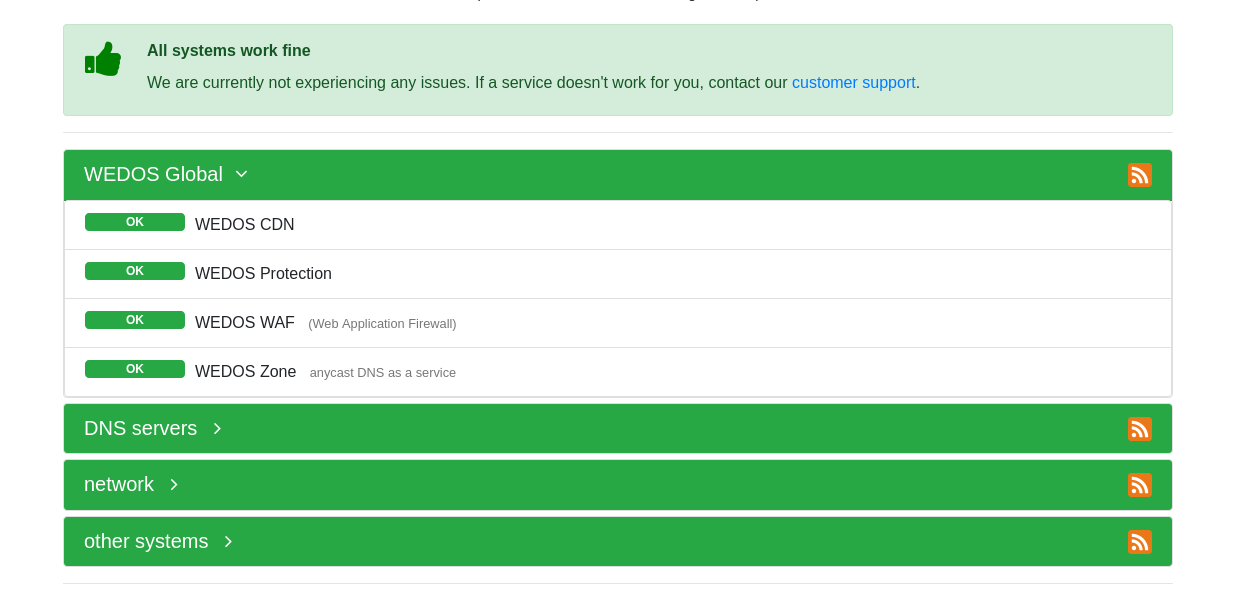
What does the basic setup allow?
The basic setup customizes how the state of your services is presented to customers or internal users. You define which data is visible, how it is displayed and how changes and incidents are published automatically.
What do the individual fields mean and why do they matter?
1
Name
What it meansThe name of the status page (e.g. Service status).
Why it mattersHelps identify the page and its purpose.
2
Default language
What it meansThe primary language for displayed information.
Why it mattersTailors the page to the target audience.
3
URL type and URL path
What it meansStructure and address where the page is available (e.g. example.com/status).
Why it mattersEnsures easy access to the page.
4
Publish changes automatically
What it meansService status changes are published automatically.
Why it mattersEnables instant awareness without manual work.
Main settings for the status page
1
Show overall status
What it meansSummary status of all monitored services.
Why it mattersGives a quick overview of current availability.
2
Show services and groups
What it meansDetails about individual services and groups.
Why it mattersAllows transparent display of specific info.
3
Show incident history
What it meansOverview of past outages and maintenance.
Why it mattersHelps users understand how issues were resolved.
4
Show date and time of last change
What it meansInformation about the last update.
Why it mattersEnsures users see current information.
5
Disable search engine indexing
What it meansPrevents indexing by search engines.
Why it mattersProtects sensitive information from public display.
Subscription settings (RSS, JSON)
1
Ended incident / maintenance
What it meansTime after which incidents are considered closed.
Why it mattersKeeps the page current and clear.
2
Subscribe to all incidents
What it meansSubscribers get notifications about all incidents.
Why it mattersProvides full awareness.
3
Subscribe to group incidents
What it meansNotifications for specific service groups.
Why it mattersEnsures only relevant information.
Why a correctly configured status page matters
The status page is a basic tool for transparent communication with customers. A correct setup ensures:
- Quick and easy availability of important information.
- Better customer trust through transparency.
- Efficient management of notifications and incidents.
Create your own status page
It is part of the free plan too. You can launch it in a few minutes.
Start monitoring free